How to reverse-engineer how AIs are mentioning your brand or content?
How to monitor your LLM brand visibility? And what you can learn from it to improve and optimise your AI brand visibility (GEO).
👉 Copy and follow this easy 3-step system.
Step 1: Analytics: AI traffic + landing page
Monitor digital analytics for AI traffic and landing pages (page views).
We picked up from analytics that Perplexity started sending a lot of traffic to our blog post "Mapping the digital customer journey in B2B". (See the image below)
Step 2: Google Search Console: Long search queries for that page
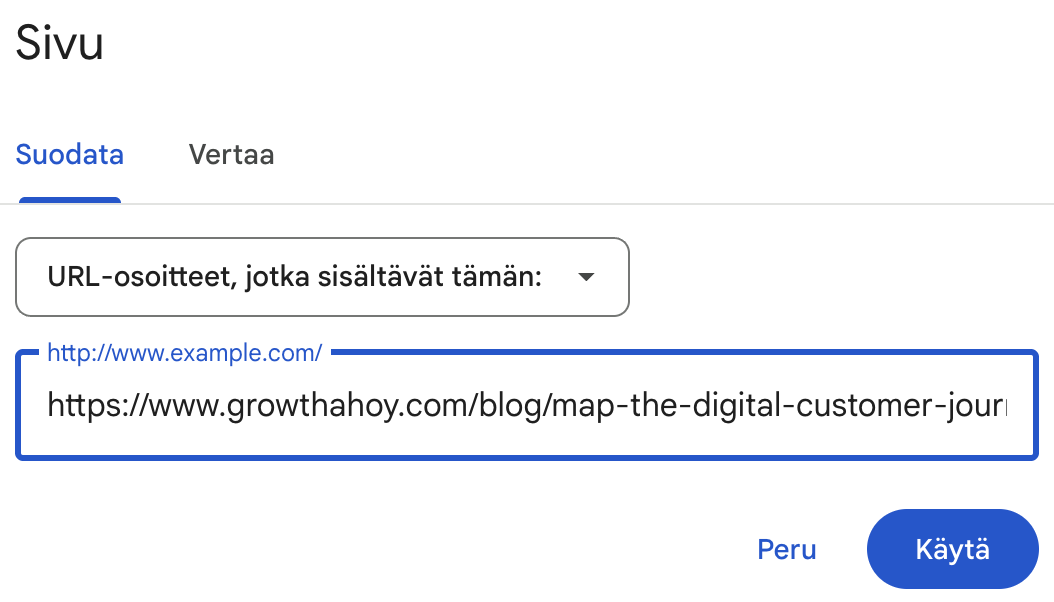
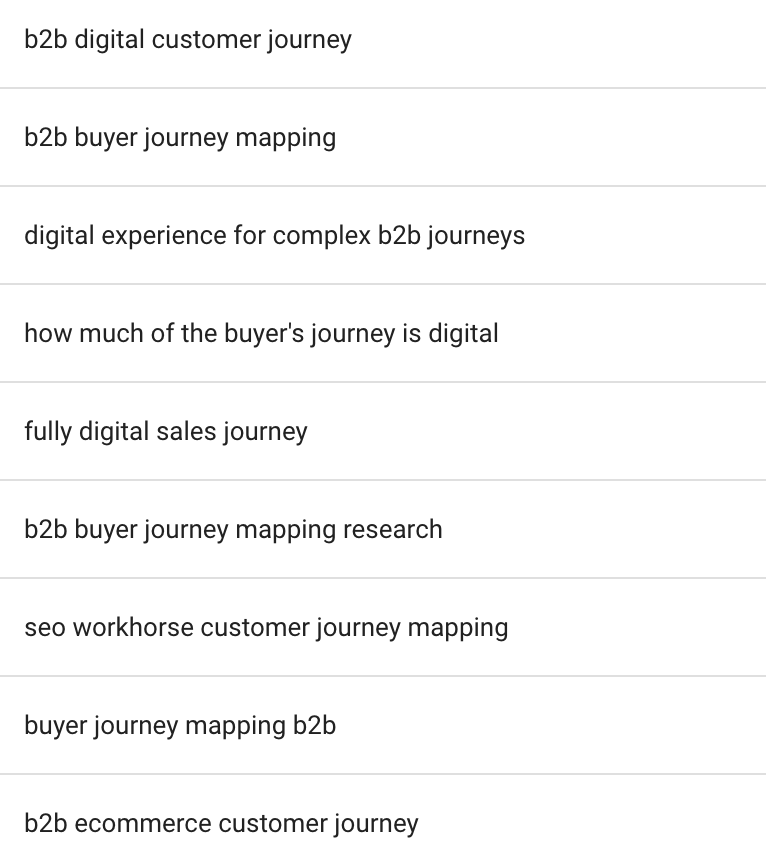
Check from Google Search Console by page URL, what kind of long form search terms are used for that page (images 2-3):
Check in Search Console: Add Filter / Page (below in Finnish: “Suodata” + “URL addresses that include”)
You will get a list of all search terms used for that specific page: these are the terms you will use in the reverse-engineering test in LLM
Step 3: LLM reverse-engineering test: Go to the LLM and test the long search queries
Go to Perplexity (or the LLM you get page views from) and test with those long-form queries if you can make your content appear in a citation.
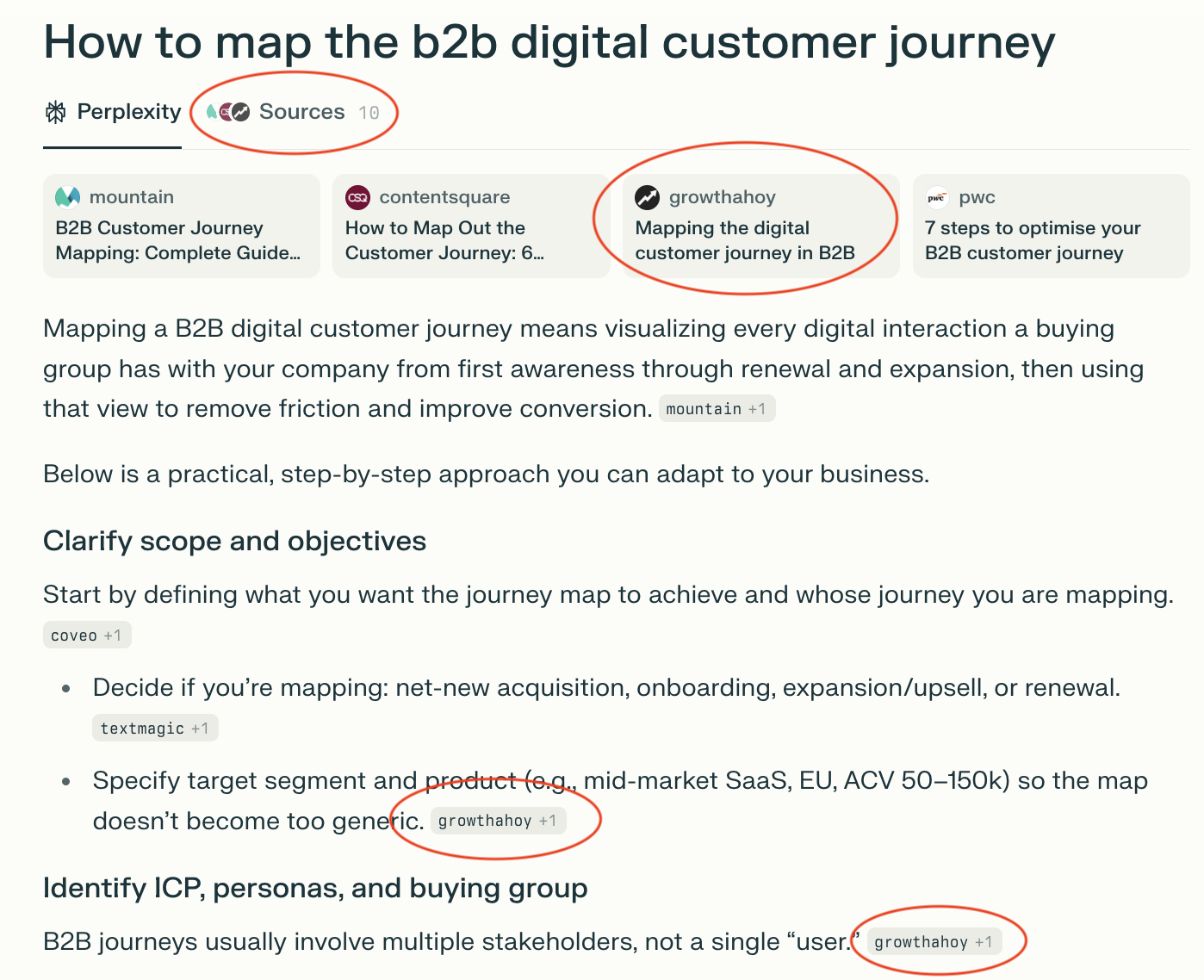
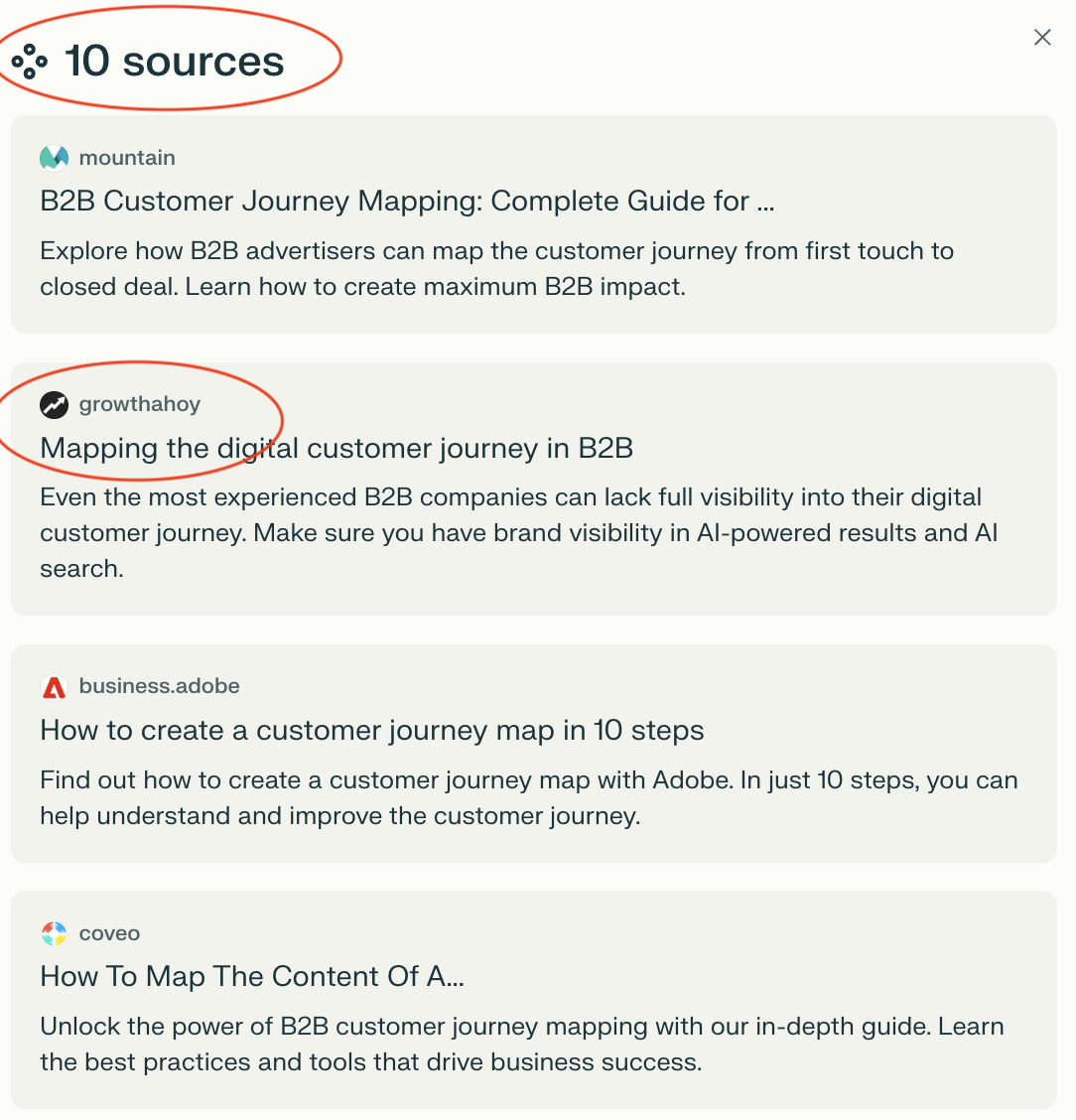
Test in Perplexity with the search term: “How to map the B2B digital customer journey” generated this chat answer below, where Growth Ahoy’s blog post is cited multiple times as one of the 10 sources for this answer.
From the list of sources, you can check all other cited sources.
Learnings: How to use this intelligence?
Use this information to update your content, create new FAQs for your website, or create new content to improve your AI brand visibility (GEO) 🚀
This is one of the monitoring LLM brand visibility strategies. Understanding how your content shows up in the AI answers helps you optimise your content for LLM brand visibility and boost your brand’s citation rate in AI search results.
What to check from the AI answer? AIs always compile the answer from multiple sources across the web.
👉 Check what other sources the LLM cited in the answer
Are they covering this topic better than you, with a clear AI-friendly content structure and using evidence-rich content to create trust signals for AI (data, statistics, academic studies, links to trusted sources, customer reviews or case studies, comparison, etc)
Are their articles fresher and more recent than yours?
Or were the citations from 3rd party trusted media or authoritative sources
How are your competitors showing up in the AI answer?
👉 Check what exactly the LLM chose from your content:
Which sentences
Paragraphs
Topics
👉 And most importantly, what did it not choose to cite from your content but from other sources?
Is your content structure AI-friendly to make it easy for AIs to find and understand information in your content?
AIs never load your whole article or copy-paste your blog post; they are like heat-seeking missiles that go directly to that chapter or those sentences within your content where the answer to the question posed in AI chat is.
Make sure that they can find this information. Use a clear title tag, logical H1-H4 structure, question-based headings, and summaries at the beginning or end of your content, etc.
Does your content lack evidence of its quality or topical depth to prove your expertise (trust signals for AI)? Consider adding more proof of your authority on the subject matter.
If the LLM cited 3rd-party trusted sources, consider doing more PR, media collaboration or partner collaboration to build more authority outside your own website with the business-critical topics you want to own.
According to 2025 research, AIs systematically and overwhelmingly prioritise earned media (third-party authoritative sources) over brand-owned content.
If other cited sources had more fresh content, consider creating new content on this topic or updating your existing content.
Easy as pie 💯 💥 So let’s go!
👉 Read also: